
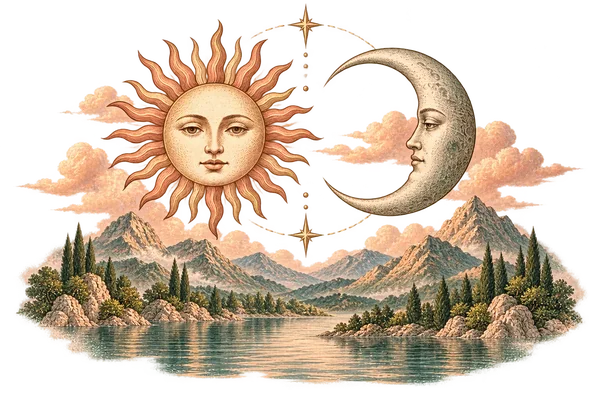
In Jungian analytical psychology, the self offers a lens for reflection. It is a theory, not a universal dream diagnosis.
Which version was yours?
Meeting a figure
Which quality stood out to you?
Becoming the figure
What felt different about being this version of yourself?
An unexpected change
What shifted in the story?
A way to think about it
Jungian analytical psychology uses archetypal images to explore patterns of experience. Wholeness, connection, and bringing opposites into conversation. This is a historical theoretical lens rather than a proven code for reading every dream. Begin with the particular person, image, or scene in your dream. Your response can complicate or contradict the theory, and that is useful information.
Lens: Jungian analytical psychology.
Take a question into your day.
Save it before it slips away. No account needed.
STORIES & CONTEXTThe stories behind the symbol
The stories behind the symbol
Archetypal readings compare dream images with motifs in myth and storytelling. The Self can provide a name for a recurring kind of encounter, but similarities across stories do not erase cultural differences. Avoid assuming that every character or image belongs to one category.
Also indexed as: self
A little more to explore.
- Freud and Jung on dreams: two historical approaches
Compare Freud’s dream-work with Jung’s attention to context and symbolic narrative. Read their ideas as historical theories, with clear limits.
Editorial draft. Updated 2026-10-12. Read our approach and sources.