
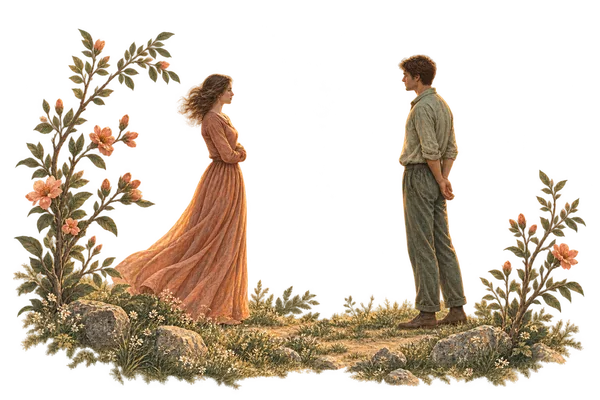
An encounter with a remembered deceased person may hold ordinary company, changed circumstances and mixed feelings without requiring a message or closure.
What this dream can mean
Ordinary forms of company
Familiar gestures and shared tasks may carry the encounter's particular significance without a spoken message.
Awareness inside the dream
Knowing, forgetting or remembering the death can change the same meeting's emotional shape.
An exchange without a factual verdict
Dreamed words can be important to you while leaving the person's actual intentions and beliefs unknown.
Which version was yours?
You share a familiar household task without discussing the death
Ordinary company becomes the center of the encounter. Notice the gesture, sound or division of work that makes it personally recognizable. The scene can hold significance without supplying information about the deceased person's present state or requiring a hidden message in the task.
You remember the death halfway through an otherwise ordinary visit
Awareness changes while the person remains in the scene. This may make pleasure and sadness appear together rather than cancel one another. Record what changes in your response; the shift does not measure how well you have accepted the loss or prescribe a feeling.
The person appears at an age you never knew them
Familiar identity and unfamiliar appearance coexist. This may combine photographs, stories and invention within the meeting. The dreamed age does not reveal an unknown historical event; notice how you recognize them and what the different appearance lets you experience in the scene.
You disagree about something and wake before replying
The exchange remains unfinished without establishing anyone's actual views. You might describe what you wanted to say and how the disagreement felt. There is no requirement to interpret it as a demand for forgiveness, evidence of guilt or proof that the relationship lacks resolution.
You introduce them to someone from your present life
A relationship from an earlier time enters circumstances they never experienced. This may picture wanting to share a part of your life or simply combine familiar people in one scene. Their dreamed response remains separate from what the real person would have thought.
You know the meeting is brief and choose to sit together quietly
Limited time does not require a final conversation. Company may feel sufficient, frustrating or both. Notice what the quiet makes possible without deciding that it proves approval, communication or closure; the encounter's significance can remain personal and open.
A way to think about it
A deceased loved one may appear in a dream through an ordinary activity, a recognizable voice or a moment of being together. The person can seem as you remember them or differ in age, manner or surroundings. Begin with the encounter rather than deciding how it happened. This page concerns someone you know to have died, while a generic apparition or a funeral has a different action and setting.
Awareness of the death may be present or absent inside the dream. You might enjoy an ordinary meal without questioning their return, remember the loss halfway through or know from the beginning that the meeting will be brief. These differences can change what the encounter feels like on waking. Joy, longing, anger, numbness and confusion need not fit a single account of how your relationship or loss should feel.
Small familiar actions can be especially particular. Folding something together, hearing an old expression or watching the person occupy their usual chair may bring remembered company into an invented scene. An anniversary, photograph, shared task or recent conversation can provide direct context. The dream is not a reliable record of what happened during their life, even when a detail feels recognizable.
If a conversation occurs, keep the remembered wording and its uncertainty. An answer may feel important, but it does not establish what the person would actually say, confirm forgiveness or provide factual instructions from them. A disagreement can be explored as part of your experience without settling the deceased person's intentions. Personal or spiritual significance can remain yours without making the encounter evidence of communication.
The ending may be ordinary or unresolved. The person leaves to do something, the scene changes or you wake before replying. You do not have to call this closure, find comfort or interpret every unfinished exchange as a hidden problem. Meeting them alongside people they never knew may place an earlier relationship within your present life. Describe what the combination allows you to feel or imagine. The encounter can be preserved as meaningful experience without requiring an explanation of its origin or a conclusion about the relationship.
Take a question into your day.
Save it before it slips away. No account needed.
STORIES & CONTEXTThe stories behind the symbol
The stories behind the symbol
No exact historical record is attached to this entry. Nearby Dead, Ghost and Funeral accounts have their own scopes and cannot establish what happened in this personal encounter. The cited maze-learning experiment concerns dream reports after a laboratory task, not bereavement, visitation, communication or a prescribed process of mourning. The reflections here are original possibilities; personal spiritual significance does not become a research finding.
Sources for this page
- Dreaming of a learning task is associated with enhanced sleep-dependent memory consolidation
Erin J. Wamsley and colleagues
Primary maze-learning experiment; task-related dream reports correlated with later performance. It does not show that a dream is an accurate memory or a solution.
Also indexed as: deceased · dead relative · late mother · late father · a deceased loved one
A little more to explore.
- Dreaming about someone who died: a gentle reflection
Explore dreams of someone who died, including familiar conversations, quiet reunions and upsetting scenes, with gentle ways to record the experience.
- Spiritual dream interpretation: reflect through your own beliefs
Explore a dream through your own spiritual beliefs while separating remembered details, personal meaning, and claims that require independent evidence.
- Do dreams predict the future? How to examine an apparent match
Examine an apparent match between a dream and a later event. Separate remembered resemblance, advance records, personal beliefs, and predictive claims.
Original reflection with AI-assisted editorial review on 2026-10-15, following the site owner’s continuing delegation of English editorial decisions. Historical accounts remain attributed period claims; the cited memory study does not validate these interpretations. Updated 2026-10-15. Read our approach and sources.