
House and home
Rooms, thresholds, remembered homes, and the state of a building.

Browse the encyclopedia
Begin with the layout you can recall. Was this your current home, a childhood address, or a house with rooms that do not exist? A door, stairway, basement, or kitchen may give the scene a particular task. Notice who could enter and whether you were settling in, leaving, or looking for something.
The House entry offers a broad starting point, while the room and home situations below let you follow a more specific detail. This path selects domestic settings from the wider Places category. It includes both original readings and attributed historical accounts; an old prediction about a building should not become a forecast about your household.
Symbols

House
The arrangements that make a place yours.
Childhood home
A remembered place seen from your present life.

Kitchen
The room can show how care, resources and belonging are arranged.

Bathrooms
Room to attend to yourself.

Shower
Washing can depend on more than turning on the water.

Attic
What has been put away may still ask for a place in the present.

Basement
A lower room can be useful, private or difficult to reconnect with.

Door
A boundary becomes a choice about who enters and where you go.

Window
You can see across a boundary without necessarily passing through it.
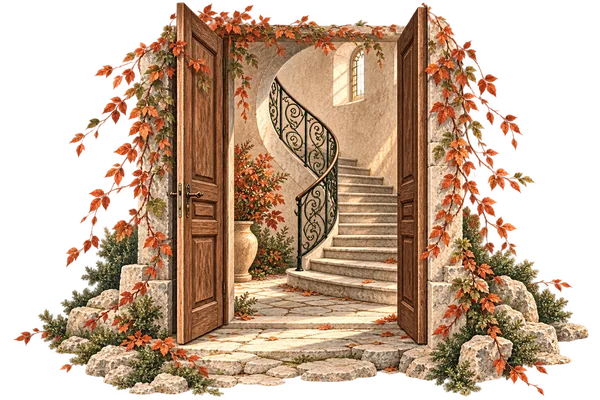
Stairs
A destination is reached one step at a time, with places to pause.
Roof
Where shelter meets exposure.
Ceiling
The room has a boundary above you as well as around you.
Homesick
Missing something familiar without losing the present.
A house search with no suitable home
Trying to find a place that fits.
A home that will not pass inspection
When a place must satisfy someone else's standard.
A child leaving home
Making room for a changed relationship.
Reflection drafts and historical sources are clearly labeled. Explore the sources and download the datasets.