
Disasters and threats
Extreme weather, fire, accidents, and escape scenes.

Browse the encyclopedia
Scale and position can change the scene: you might watch a distant event, find yourself in its path, help someone leave, or return afterwards. Record what you could do and whether you had information, shelter, or company. Compare the event with the action you remember rather than starting with a forecast.
This selected path groups natural hazards with some human-made threats because a dream may move between them. Each keeps its own canonical entry and source context. Historical disaster accounts are period interpretations, and the original readings invite reflection on the dreamed situation. Returning after an evacuation is also different from the moment of escape.
Symbols

Earthquakes
What moves and what remains can need different responses.

Floods
Water changes what a place lets you do.
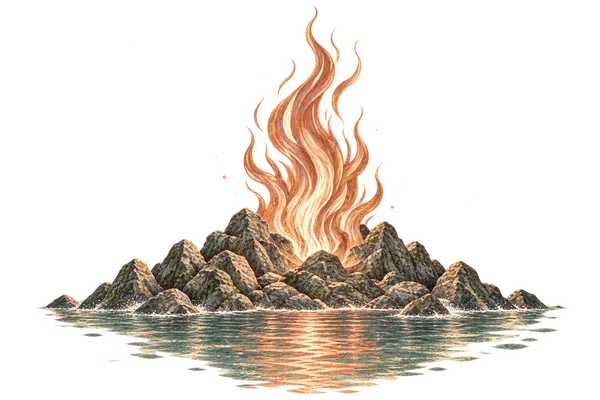
Fire
A flame that sustains you differs from a blaze that takes over.

A tornado
A moving threat makes direction and attention matter.

Hurricane
Disruption has a duration and an aftermath.

Tsunamis
The scene’s scale changes the choices available.

Volcano
A familiar landmark can become active.
Avalanche
A released mass of snow that abruptly changes an otherwise recognizable route.

Nuclear war
A vast imagined event and a few nearby choices.

Bomb
A threat, a countdown, or something that may never detonate.
Accident
An unplanned event and what happens next.

Returning home after an evacuation
Returning to a building and feeling at home can take different forms.
Reflection drafts and historical sources are clearly labeled. Explore the sources and download the datasets.