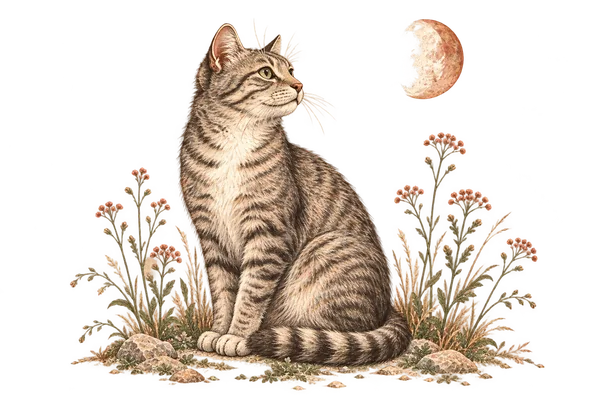
A cat curling beside you, slipping through an unknown doorway, or scratching when you reach for it creates a particular encounter. Begin with that encounter. The animal’s color or reputation cannot tell you how the scene felt, who initiated contact, or what you wanted to happen next.
The questions here are original reflection prompts. They do not establish facts about another person or turn an animal into an omen. A remembered pet, a recent photograph, or an ordinary moment of affection can remain a sufficient personal association.
A familiar cat comes with its own history
Record whether you knew this cat by name or recognized a habit, marking, or sound. A former pet may appear in a current home; several animals may seem combined. Keep those details rather than correcting the scene into something that could happen while awake.
Ask what is particular to your relationship with the animal. Waiting together by a window differs from coaxing a frightened rescue cat out of hiding. A broad idea such as independence may miss the care, company, or shared routine that makes this cat important to you.
Approaching, leaving, and changing the terms of contact
If the cat chooses your lap, notice whether you welcome the stillness or want to get up. If it moves away, record whether you follow, wait, or lose interest. The same movement can feel rejecting, reassuring, or unremarkable depending on what you wanted.
A scratch after a cuddle adds a change worth recording. You might ask about a limit you did not notice or a surprise that altered the tone. That is an optional personal comparison, not proof that someone is secretly hostile. You can also leave the event as an animal interaction without turning it into a relationship lesson.
Kittens, hiding places, and unfamiliar rooms
Finding a kitten can place a practical task at the center: locating food, warmth, a safe place, or another helper. Describe what you actually tried. The question may concern what you can offer with the resources available, rather than an unlimited duty to solve everything.
Following a cat into an unknown room creates a different task. You may be curious about the space, anxious to retrieve the animal, or pleased to discover a quiet place. Record which motive leads you through the doorway. A hidden room in a dream does not establish a hidden memory or require you to search for one.
Black cats, white cats, and borrowed associations
If the color mattered, describe when you noticed it and what it brought to mind. Perhaps a black cat resembles your neighbor’s pet, or a white kitten recalls a picture book. Your association can be specific and ordinary. If the color made no difference in the dream, you need not make it the organizing feature afterward.
DreamFolia’s dictionary preserves attributed historical cat lore, including conflicting forecasts. Its value is as a record of what particular authors wrote. Those accounts do not establish bad luck, deceit, or a person’s intentions, and they provide no reason to distrust or harm an animal.
An invented example: the cat under the table
Consider: “An unfamiliar cat hid under the table during dinner. Everyone told me to pull it out. I put a bowl nearby and returned to my seat. Later it came out by itself. I felt pleased.” The remembered contrast is between the group’s demand and the dreamer’s quieter response.
One question might be, “When is making room more useful to me than forcing an answer?” Another is simply whether this resembles caring for an animal the dreamer knows. The account does not prove that the group represents controlling relatives. If the dreamer instead felt worried about leaving the cat alone, that change would need its own reading.
Keep memory, reflection, and uncertainty together
A cat that has died may return to a familiar place in the dream. Write the routine and the feeling it leaves: comfort, sadness, surprise, or something harder to name. Personal significance does not depend on proving where the experience came from. You can keep a question open.
For your notebook, separate what the cat did from what you later thought it might mean. When comparing several entries, look for changing contact, settings, and available help. Let an affectionate encounter remain affectionate if the details give you no reason to search for a warning.
- What made this cat recognizable or unfamiliar?
- When did contact become welcome, difficult, or unnecessary?
- Which detail would not fit your first interpretation?
Explore a dream symbol.
Use these entries as starting points for your own reflection.