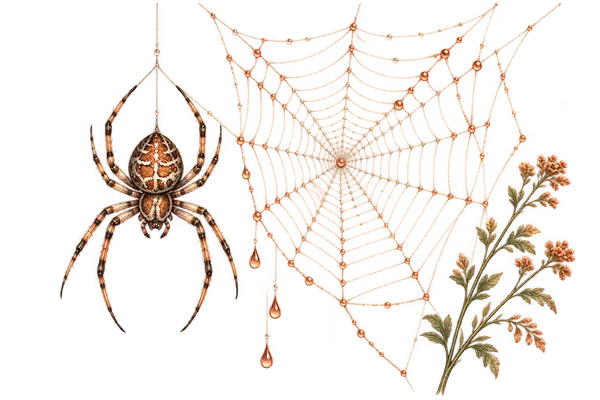
The question in a spider dream may be how to pass a doorway, what is touching your skin, or whether to disturb something you are watching. Those are different scenes even when the same animal appears. Record the action before choosing a general idea such as fear, patience, or entanglement.
This guide offers original ways to compare remembered details. It makes no claim that spiders carry a universal message. A recent encounter, a film, an insect you watched, or a particular feeling about shared space may be the most useful context for you.
How close was the spider, and what did you want?
A spider across the room differs from one on your sleeve. Write down the distance, your first movement, and whether the animal approached you or you approached it. If you were watching with interest, preserve that tone instead of borrowing a frightening interpretation that does not fit.
Size is another detail whose importance depends on the scene. A huge spider far away might feel less intrusive than several tiny ones in your bed. Ask which feature changed your choices. You can describe discomfort or curiosity without concluding that the animal represents a particular person.
A web can be an obstacle, a structure, or background
If a web spans an entrance, the task may involve deciding whether to pass through, find another way, or stop. If you watch a spider building, the remembered focus may be a repeated movement or a delicate structure. The web’s role in the scene matters more than treating every thread as a trap.
You might compare an obstructed route with a waking task that has become awkward, if a specific example fits. Watching a pattern form could invite a different question about attention or work in progress. Either reading remains a proposal. The presence of a web does not establish manipulation or a hidden scheme.
A bite or a crawling sensation: record the remembered event
For a dreamed bite, describe what happened before and after it: where you were, whether you saw the spider, what you expected, and who responded. If the account only contains a sensation and a later guess about its source, keep that uncertainty visible rather than supplying an animal you never saw.
A dreamed sensation cannot establish that a real bite occurred or explain a waking symptom. If there is a waking concern, assess it separately using appropriate real-world information. For reflection, the useful question may simply concern the moment you wanted more distance or help, without drawing a medical conclusion from the dream.
Many spiders and the problem of deciding where to look
A room with many small spiders may make it hard to choose one place to act. Notice whether you inspect, leave, call someone, or try to clear everything at once. The scene might invite a question about several small demands competing for attention, provided you recognize that situation while awake.
It may also recall a specific place or encounter. Keep that simpler possibility alongside the comparison. Counting spiders after waking can introduce precision that was absent from the dream. “More than I could follow” can be a more faithful record than a number you do not remember.
An invented example: a web across the workshop door
Imagine: “A web covered the workshop entrance. I worried about breaking it. Another door was open, but I kept trying to move the web intact. The spider stayed still. I felt frustrated.” The spider does not pursue the dreamer. The difficulty concerns preserving the web while insisting on one entrance.
A possible question is whether a preferred way of beginning a task has become more important than the task itself. Another is whether the dreamer dislikes disturbing a small living thing. The open second door challenges a reading of total entrapment. The example shows how an interpretation should remain accountable to details that complicate it.
Let your response guide the next comparison
Write one sentence about the animal and one about your own action. Add the feeling you remember, including calm or curiosity. Then consider one personal association and one alternative. You do not need to resolve every detail before the record is useful.
The dictionary reading offers more scenes and source-specific historical context. If your main memory is pursuit, use the chase guide; if it is repeated fear across several nights, compare the dated accounts rather than assuming that a recurring animal makes each scene identical.
- What did the spider or web actually prevent, invite, or change?
- Which part of the scene did you choose to approach?
- What detail complicates your first reading?
Explore a dream symbol.
Use these entries as starting points for your own reflection.